Ocean Awareness Starts with Safe Exploration
Winter in Australia might mean fewer beach outings, but it’s the perfect time to deepen your understanding of ocean safety, emergency response, and responsible exploration. Whether you’re brushing up on your theory, completing coursework, or preparing for future dive adventures, the habits and knowledge you build now will serve you (and your students) for years to come.
At PADI, we believe education is key to protecting both people and the ocean. As a Registered Training Organisation (RTO), we also know that safety is at the core of every great dive experience—and it starts long before getting in the water.
Rip Currents: Be Prepared Before You Return to the Surf
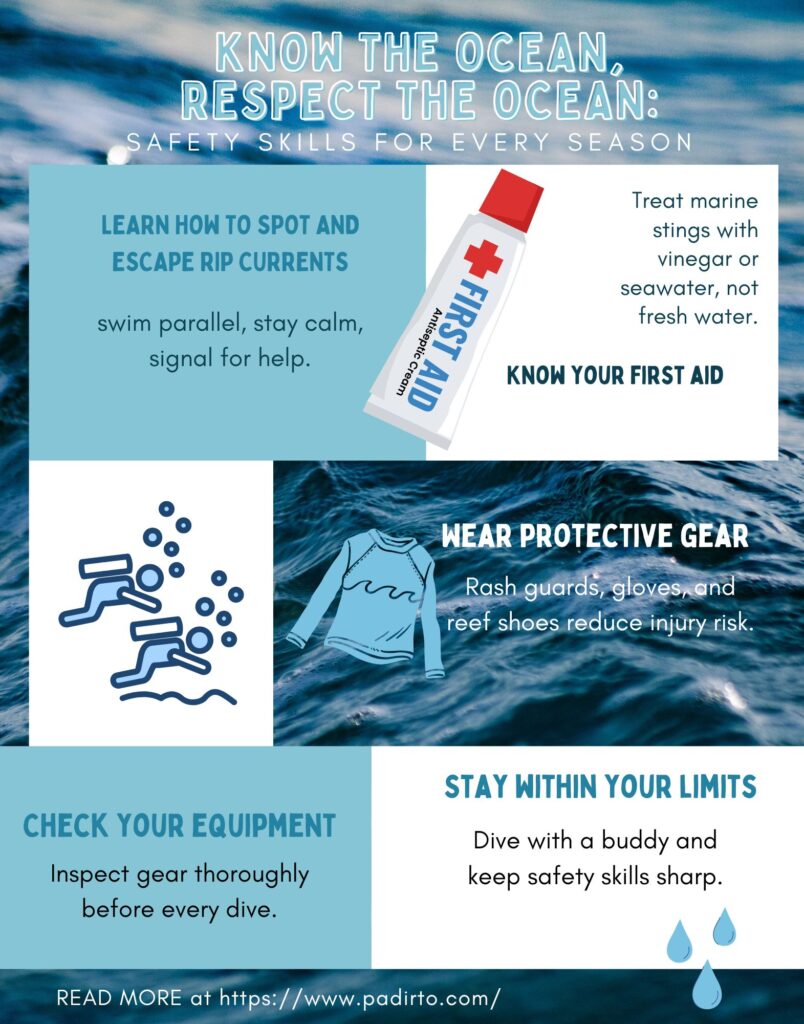
Rip currents are one of the most common coastal hazards in Australia. Even confident swimmers can get caught off-guard. Winter is the ideal time to understand the science behind them and review rescue techniques.
Stay rip-ready with these tips:
- If caught in a rip, remain calm and float to conserve energy.
- Swim parallel to the shore to escape the current, then head back to land.
- Signal for help if you can’t return safely.
- Always swim at patrolled beaches and with a buddy.
Marine Stings & Spikes: What Every Ocean-Explorer Should Know
Australia’s waters are home to some stunning, but stinging, marine life. From jellyfish and sea urchins to venomous fish. Knowing how to respond effectively is essential—especially for those working toward Divemaster or Instructor-level training.
PADI RTO-Recommended First Aid for Marine Stings:
- Jellyfish: Rinse the area with vinegar to neutralise the sting. If vinegar is not available, use seawater—never fresh water.
- Remove any tentacles with gloved hands or tweezers, not bare fingers.
- Monitor for signs of a severe allergic reaction: difficulty breathing, dizziness, or swelling.
- Sea urchin spines: Soak the area in hot water (as hot as the patient can tolerate) to reduce pain. Don’t try to dig out deep spines—seek medical help.
Use this time to review your First Aid knowledge or consider booking a refresher course to stay sharp.
Environmental Hazards: Respect the Ocean Terrain
Cuts, scrapes, and bruises from coral, rocks, or submerged debris are common but preventable.
Ocean Safety Essentials:
- Wear protective gear like reef-safe water shoes and gloves when exploring rocky areas.
- Before diving or snorkelling, assess the entry/exit points for hidden hazards.
- Never dive alone—always dive within your training and certification level.
PADI’s RTO courses help equip students with the knowledge and confidence to assess environmental risks before they become emergencies.
Ocean Safety & First Aid: A Year-Round Priority
Even in winter, your role as a diver, student, or future dive professional continues. Whether you’re completing your PADI Open Water Diver course, training to become a professional, or helping others along their journey, your knowledge of safety protocols makes a difference.
Consider using this season to:
- Complete or refresh your First Aid skills.
- Practise rescue scenarios in controlled environments.
- Share key safety tips with your peers, students, or online audience.
Lead with Knowledge. Dive with Confidence.
The ocean is as rewarding as it is unpredictable. With the right training, awareness, and respect, we can all play a part in making every dive safer—for ourselves, our students, and our planet.
Whether you’re planning your next dive trip or teaching the next generation of divers, let’s keep building skills that protect both people and the ocean.
Tags: Diving, First Aid, Nationally Recognised Training, PADI, PADI RTO, Provide First Aid, RTO, RTO Trainer, Training